Guides → What makes a roller coaster thrilling?
What makes a roller coaster thrilling?
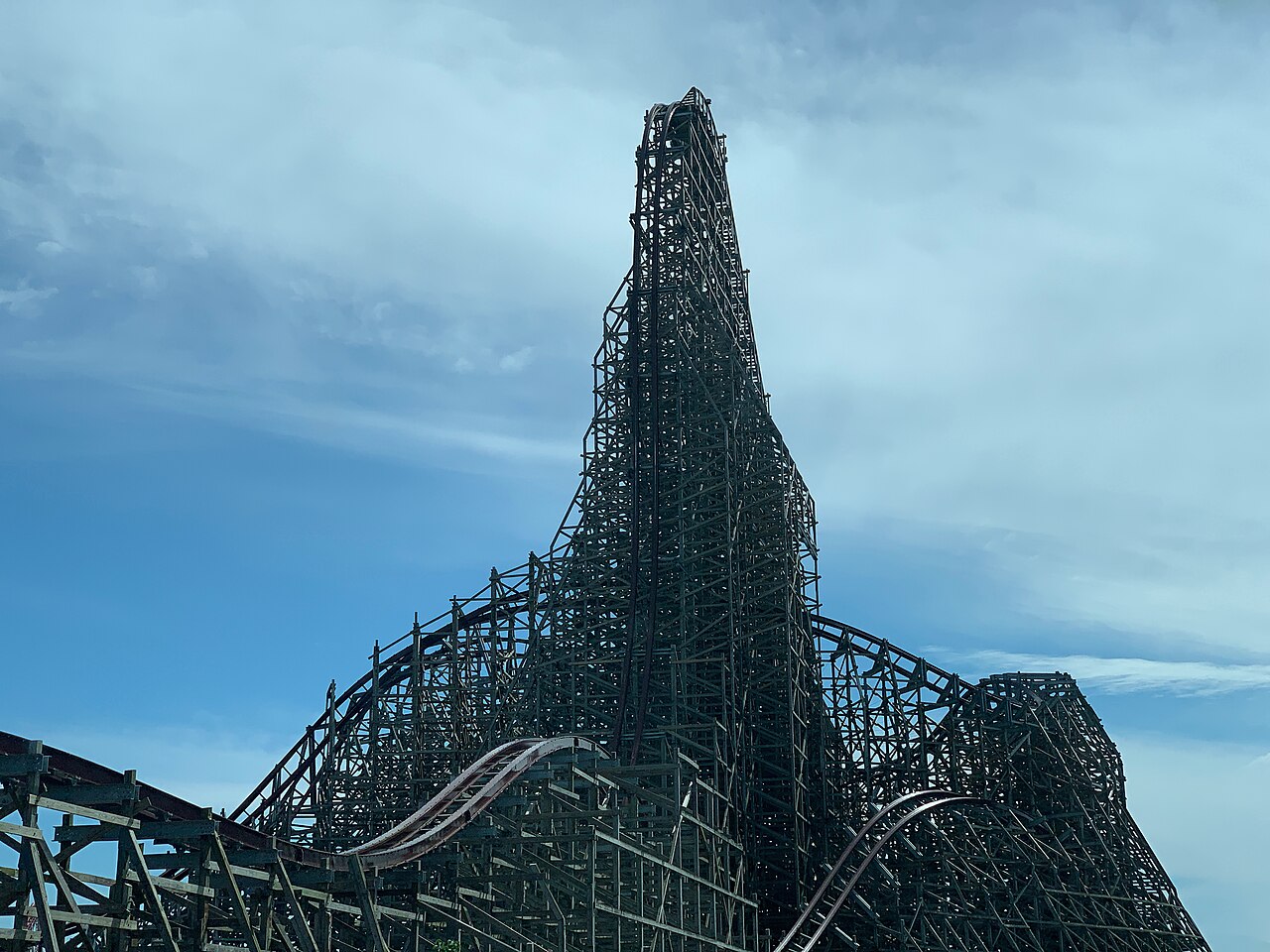
TL;DR: Four published numbers decide how a coaster feels: top speed sets the intensity, height buys the airtime and the plunge, inversions add disorientation, and length stretches it all into an experience. No single stat crowns the most thrilling ride; it's the mix. Achtbaan turns those four numbers into one transparent 0 to 100 thrill score so you can rank any two rides head-to-head.
Ask ten enthusiasts which coaster is the most thrilling and you'll get ten answers, and a lot of arm-waving. The problem is that "thrilling" bundles several different sensations together. A launch coaster that pins you to your seat feels nothing like an airtime machine that throws you out of it, yet both are genuinely intense. The good news: almost everything you feel on a ride traces back to four numbers that parks publish for every coaster. Learn to read them and you can predict how a ride will feel before you ever join the queue.
Top speed: the intensity dial
Speed is the headline stat, and for good reason: it scales the force of everything else. A faster train carries more energy into every hill and curve, so drops hit harder and direction changes snap rather than sweep. The extreme end is Formula Rossa at Ferrari World, which hydraulically launches to 240 km/h in under five seconds; the acceleration alone is the ride. But raw speed without shaping is just a straight line, which is why the best rides pair pace with a layout that keeps spending that energy. On Achtbaan, speed carries the most weight in the thrill score precisely because it amplifies every other element.
Height: airtime and the plunge
Height does two things. First, it sets up the first drop: the anticipation at the crest and the stomach-lifting plunge that follows. Second, taller structures allow bigger, more sustained hills later in the layout, which is where airtime (that floating, out-of-your-seat feeling) comes from. Kingda Ka, at 139 metres, long held the tallest-coaster record and turns its height into a single towering top-hat. Contrast that with a hyper-coaster like Millennium Force, which uses its height for a relentless series of floater hills. Same stat, two completely different thrills, which is exactly why you can't rank rides on height alone.
Inversions: the disorientation multiplier
Inversions (loops, rolls, stalls and dives that turn you upside down) add a sensation the other stats can't: spatial confusion. A ride with many inversions keeps changing which way is up, so your body never quite settles. The Smiler at Alton Towers wraps a record-tying fourteen inversions into a compact, deliberately disorienting layout, while Eejanaika spins its seats independently for the same tally. A word of nuance: airtime fans sometimes find heavy inversion counts less thrilling, because time spent inverting is time not spent floating. This is the clearest case for comparing on your own priorities rather than a single leaderboard.
Length: turning a moment into an experience
Length is the quietest stat and the most underrated. A short, sharp launch coaster like Stealth delivers one enormous hit and it's over in seconds; a long ride like Steel Dragon 2000: nearly two and a half kilometres, sustains the sensation, stacking drops and hills so the intensity has room to breathe. Length is also what separates a great moment from a great ride: more track means more distinct beats, more airtime, and a stronger memory when you walk off.
Reading the mix, not the maximum
Here's the key insight: the most thrilling coaster is never the one that wins a single category. It's the one whose blend matches what you want. That's why Achtbaan normalises all four stats against a reference maximum, weights them (speed 40%, height 28%, inversions 18%, length 14%) and sums them into a single transparent thrill score: a starting point for the argument, not the end of it. Watch those four weighted parts add up for any coaster in the Thrill Score Explorer. Want to test the theory? Open the explorer, sort by thrill, then filter by type or country to see how the blend shifts, and read the exact formula on our methodology page.
Finally, a practical note for anyone turning this into a trip. Many of Europe's best coasters (Toverland, Walibi Holland, the Efteling) sit within a short drive of Amsterdam. If you're flying in to ride them, sort your airport parking before you go with our sister guide, Schiphol Parking Guide, so the only queue you wait in is for the front row.