Guides → Steel vs wooden vs hybrid roller coasters
Steel vs wooden vs hybrid roller coasters: what's the difference?
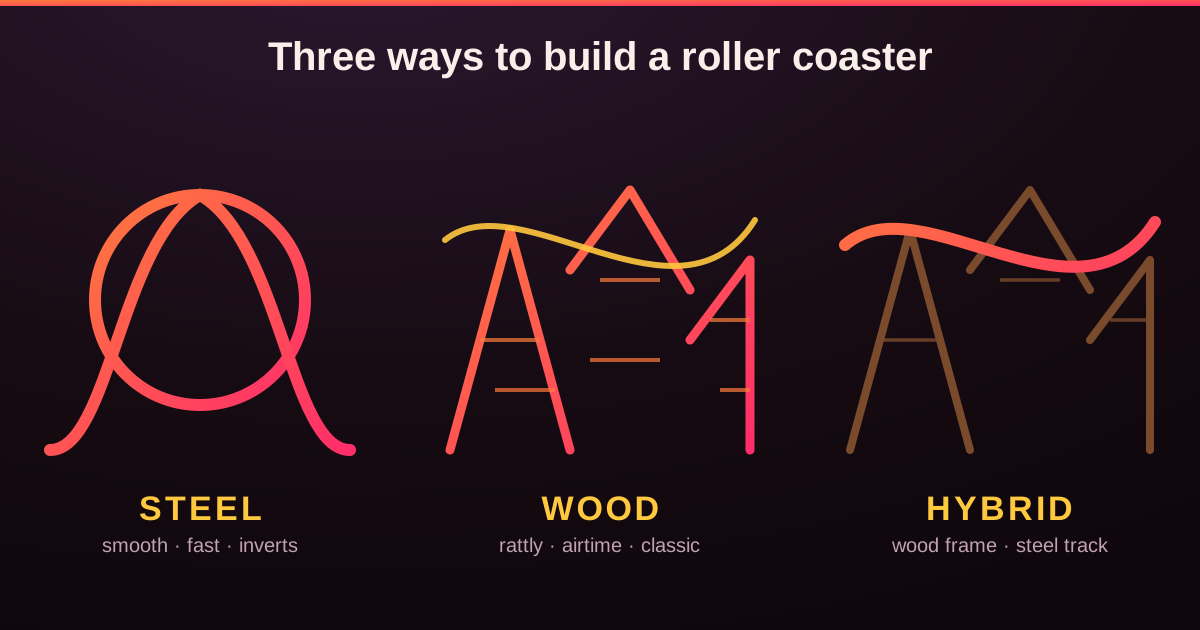
TL;DR: Steel coasters use tubular steel track for glassy-smooth, high-speed layouts that can loop and invert; wooden coasters ride on stacked-timber track for a rougher, rattly, airtime-heavy classic; and hybrid coasters put a smooth steel track on a wooden support structure to get wooden looks with steel smoothness, and some of the wildest layouts ever built. No type is automatically "best"; they simply feel different, which is exactly what Achtbaan's thrill score is designed to cut through.
If you have ever stood in a park comparing two rides and wondered why one looks like a spider-web of timber and the other like a ribbon of shining metal, you have already met the biggest dividing line in coaster design. Almost every roller coaster on Earth is one of three construction types: steel, wooden, or hybrid: and that single choice shapes how fast it can go, whether it can turn you upside down, and how it feels in your seat. Here is what actually separates the three, with real examples, so you can predict the ride from the track.
| Attribute | Steel | Wooden | Hybrid |
|---|---|---|---|
| Track & structure | Hollow tubular-steel rails on a steel frame, precision-bent to almost any shape. | Laminated-timber track capped with a thin steel strip, on a wooden lattice. | A smooth steel track (typically RMC's I-Box) run over a wooden support structure. |
| Ride feel | Glassy-smooth, precise and forceful, quiet even at high speed. | Rougher and rattly; the timber flexes, so a good woodie feels wilder than its stats. | Steel-smooth, but with a woodie's tall, sprawling, unpredictable geometry. |
| Speed & height | The widest range of all: from gentle family rides up to the world records (Formula Rossa, 240 km/h; Kingda Ka, 139 m). | Moderate: tall and quick for timber, but below steel's extremes. | Pushes into hyper territory: 60 m-plus drops at highway speed (Steel Vengeance, Iron Gwazi). |
| Inversions | Yes. Steel's specialty: loops, corkscrews and zero-g rolls, up to 14 (The Smiler). | Very rare. Pure wooden layouts almost always stay upright, trading loops for airtime. | Yes. Steep drops plus rolls, stalls and wave-turns (Steel Vengeance: 4; Zadra: 3). |
| Maintenance & weather | Lower day-to-day variation; rides consistently in most conditions. | Timber expands and contracts: constant upkeep, track re-tracked regularly, and the ride can feel different hot vs. cold. | The steel track rides consistently; re-tracking a tired woodie in steel is itself the big maintenance win. |
| Iconic examples (in our data) | Formula Rossa, Millennium Force, Fury 325, Kingda Ka. | Troy, Joris en de Draak. | Steel Vengeance, Iron Gwazi, Zadra, Untamed. |
Steel roller coasters: smooth, fast and upside-down
Steel coasters run on hollow tubular steel rails, precision-bent into whatever shape the designer wants. Because that track is so rigid and precisely formed, the ride is smooth and quiet, and trains can carry huge speed through tight, computer-shaped curves. Crucially, steel is the only material that reliably lets a coaster invert, so nearly every loop, corkscrew and zero-g roll you have ever seen belongs to a steel ride. The type also spans the biggest range of any category: from gentle family coasters to the record-breakers. The fastest coaster in the world, Formula Rossa, is steel; so is Kingda Ka, which for years held the height record. If you want raw speed, height and inversions, steel is where they live. On Achtbaan you can filter the rankings to steel coasters and watch the intensity numbers climb.
The trade-off is character. Because steel track is so exact, some steel coasters can feel too clean: forceful and impressive, but without the unpredictable, hanging-on-for-dear-life edge that fans of the old wooden machines crave. That missing texture is exactly the gap the other two types fill.
Wooden roller coasters: the rattle, the airtime, the classic
Wooden coasters are the originals, and they ride on track made from layers of laminated timber topped with a thin steel strip. That structure flexes a little as the train passes, which is the source of the famous wooden "rattle": the rough, alive, slightly chaotic feeling that makes a good woodie feel faster and wilder than its stats suggest. Wooden layouts tend to stay upright (inversions are rare and difficult on timber) and instead specialise in airtime: those out-of-your-seat moments over sharp hills where the classic buzz-bar or lap bar is the only thing keeping you down. Rides like Wildfire at Kolmården and Troy at Toverland show how much fun a modern woodie can be: tall, fast and relentlessly floaty without a single loop.
Wood also ages in a way steel does not: timber expands, contracts and needs constant maintenance, and two rides on the same wooden coaster on a hot afternoon versus a cold morning can feel genuinely different. For purists that variability is a feature, not a bug; it is a big part of why wooden coasters inspire such loyalty even in an era of ever-taller steel.
Hybrid roller coasters: the best of both worlds
Hybrids are the newest and, for many enthusiasts, the most exciting category. The idea is simple: keep a wooden support structure (or build a new one) but run a smooth steel track over it, most famously the I-Box track pioneered by Rocky Mountain Construction. The result marries the tall, sprawling silhouette and airtime-friendly geometry of a woodie with the buttery smoothness, steep drops and inversions that only steel allows. In other words, hybrids can do things neither pure type can: an 90-degree drop, an outward-banked turn and a barrel roll, all in one layout, all without rattling your fillings loose.
The dataset behind Achtbaan is full of them: Steel Vengeance at Cedar Point, Iron Gwazi in Florida, Zadra in Poland and Untamed at Walibi Holland are all hybrids, and all rank near the top of their regions for a reason. Many of them started life as ageing wooden coasters that were "re-tracked" with steel, saving a beloved structure and turning a tired ride into a world-beater. If you have never ridden one, pull up the hybrids on Achtbaan and note how their thrill scores compare with the classic steel giants.
So which type is the most thrilling?
Here is the honest answer: none of them, automatically. Construction type tells you a lot about how a ride will feel (smooth versus rough, loopy versus floaty), but it does not decide how intense it is. A short steel family coaster and a towering hybrid are both "steel-tracked", yet they are worlds apart; a modern woodie can out-thrill plenty of steel rides on airtime alone. That is precisely why Achtbaan ignores the marketing and scores every coaster on the same four published numbers (speed, height, inversions and length) to produce one transparent 0 to 100 thrill score. Want to test your instincts? Open the explorer, filter by type, and see whether the steel, wood or hybrid rides really do land where you expect. (If you are curious how those four stats each change a ride, our companion guide on what makes a coaster thrilling breaks it down.)
One practical note for anyone turning this into a trip: several of the hybrids and woodies mentioned above (Untamed, Troy, Toverland's line-up) sit within a short drive of Amsterdam. If you are flying in to ride them, sort your airport parking before you go with our sister guide, SchipholParking.info, so the only queue you wait in is for the front row.
Frequently asked questions
What's the main difference between steel and wooden roller coasters?
Steel coasters run on precise, hollow tubular-steel rails, so they ride smoothly and can loop, invert and carry huge speed through tight, computer-shaped curves. Wooden coasters ride on laminated timber topped with a thin steel strip, which flexes as the train passes, giving the famous "rattle" and strong airtime, but almost never inversions.
Are hybrid roller coasters steel or wooden?
Both. A hybrid keeps a wooden support structure but runs a smooth steel track (most famously RMC's I-Box) over it. That marries a woodie's tall, airtime-friendly geometry with steel's smoothness, steep drops and inversions, things neither pure type manages on its own.
Can wooden roller coasters have loops or inversions?
Very rarely. Timber track flexes and isn't precise enough to hold a train safely through a full inversion, so wooden coasters almost always stay upright and specialise in airtime hills instead. A hybrid conversion is how you add inversions to a wood-structured ride.
Which type of roller coaster is the smoothest?
Steel and hybrid rides are the smoothest, because both run on precisely-formed steel track. Pure wooden coasters are deliberately rougher; that lively rattle is a feature fans love, not a fault.
Which is the most thrilling: steel, wooden or hybrid?
None automatically. Construction type tells you how a ride feels (smooth versus rough, loopy versus floaty), not how intense it is: a towering hybrid and a gentle steel family coaster are both "steel-tracked" yet worlds apart. That's why Achtbaan scores every coaster on the same four numbers (speed, height, inversions and length) for one transparent 0 to 100 thrill score.
Why are old wooden coasters being turned into hybrids?
Re-tracking an ageing wooden coaster with steel, a "hybrid conversion", saves the beloved structure while turning a rough, tired ride into a smooth world-beater. Steel Vengeance at Cedar Point and Iron Gwazi in Florida both started life as wooden coasters before their hybrid rebuilds.